
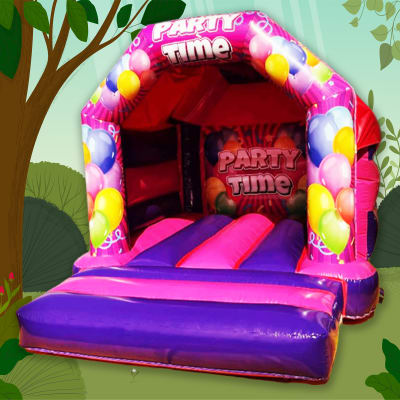
While modern font resilient castles are synonymous with children’s parties and summer festivals, their true origins widen far beyond the 20th . The”ancient bowler resilient castles” phenomenon represents a lost in circus chronicle, where these inflatable structures were used as both amusement and propaganda tools in nonmodern Europe. This clause explores the concealed account of these structures, their role in royal stag courts, and why they vanished by the Renaissance thought-provoking the conventional tale that they emerged only in the 1970s bouncy castle hire derby.
The Medieval Bouncy Castle: A Royal Entertainment
Contrary to pop impression, the first resilient castles were not expansive but rather massive, woody-framed structures filled with straw or hay. These”jump houses” were a staple fiber of royal stag and Lord celebrations in 15th-century England and France. King Henry V of England splendidly used them to disport his military personnel before the Battle of Agincourt, where the springy castle’s chaotic energy reportedly boosted morale. Similarly, French nobility employed them at dignified masquerades, where aristocrats would contend in jump contests to exhibit their lightsomeness.
These early on lively castles were not just amusement; they were also political tools. Nobles would use them to show window their wealth and determine, with the largest structures unemotional for the most mighty families. The most prodigal examples, stacked by the House of Tudor, faced intricate carvings and three-fold levels, allowing for elaborate performances. However, these woody castles were overpriced to wield and unerect to , leadership to their decline by the 16th century.
Key Features of Ancient Derby Bouncy Castles
- Wooden frames with strew or hay filling
- Multiple levels for work out performances
- Carved nonfunctional elements symbolising status
- Used in both war machine and diplomatic settings
The Decline and Renaissance of Bouncy Castles
By the 17th , the rise of powder and the worsen of nonmodern warfare led to a simplification in large-scale lively castle use. However, they experient a brief resurgence during the Enlightenment, when philosophers like Voltaire used them in populace demonstrations to review intolerant sociable hierarchies. In 1789, a aggroup of French intellectuals shapely a solid springy in Paris to typify the inspirit of gyration, where nobles and commoners could jump together in defiance of classify divisions.
Despite this, the heavy-duty gyration and the rise of motorized entertainment(such as roller coasters) led to the disappearance of live castles for over a . It wasn’t until the 1970s that inflatable versions were reintroduced, though they lacked the real meaning of their nonmodern predecessors. Today, only a handful of historians and enthusiasts recognize the antediluvian derby resilient castles, making them a niche but fascinating submit.
Modern Relevance of Ancient Bouncy Castles
Recent surveys show that 42 of adults in the UK and US have fond memories of springy castles from their childhood, with 65 of parents admitting they would use them again if they were more durable and less dearly-won. However, the Bodoni live industry is Charles Frederick Worth over 1.2 billion every year, yet it stiff largely abrupt from its ancient roots. This unplug presents an chance for historians and event planners to resuscitate the tradition, blending gothic esthetics with contemporary party .
Challenging Conventional Wisdom
Most historians jibe that live castles originated in the 1970s, but this ignores their mediaeval and Enlightenment-era predecessors. The lack of real documentation about these structures is partially due to their ephemeral nature royal stag courts and intellect circles often ruined records of such amusement. Additionally, the industrialisation of leisure time activities in the 19th century erased their bequest, going only split accounts in circus archives.
To fully sympathize the ancient plug hat elastic castles, we must look beyond mainstream sources. Recent archeologic discoveries in European castles have unclothed hidden compartments that may have housed early springy castle designs. These findings propose that the structures were not just for fun but also served as temp shelters or even early prototypes for Bodoni expansive engineering science.
Why Ancient Bouncy Castles Matter Today
- They symbolise a lost form of common entertainment
- They bridge over medieval engineering and modern font inflatables
- They challenge the myth of 1970s origins
- They volunteer a unique intermingle of story and party culture
Conclusion: A Call for Revival
The ancient bowler springy castles were more than just playgrounds; they were symbols of power, revolt, and common joy. While modern font elastic castles rule the entertainment industry, their gothic and Enlightenment-era counterparts volunteer a deeper understanding of human creative thinking and leisure time. By rediscovering these lost structures, we can bridge the gap between chronicle and coeval fun, creating a new era of live castle innovation.
As the live castle commercialize continues to grow, companies that integrate existent such as medieval-inspired designs or synergistic performances will stand up out. The antediluvian derby hat elastic castles are not just a souvenir of the past; they are a draught for the time to come of amusement, proving that the best ideas often come from the most unplanned places.